
Category: reading
You are viewing all posts from this category, beginning with the most recent.
Doctrine good, stories bad?
I have learned much over the past several years from brothers and sisters of the Reformed theological persuasion. I love and respect them deeply. But the good Dr. Daniel J. R. Kirk today puts his finger on a point which has provided me some unease in my conversations with my Reformed brethren, saying it, as usual, more succinctly than I could.
Quoth Daniel:
Doctrine Good. Stories Bad. That’s the mini-theme of this month’s Christianity Today.
I begin with the most egregious offense. There’s a short inset on p. 26, snipped from a book by J. I. Packer and Gary A. Parrett (Grounded in the Gospel; Baker, 2010) entitled, “The Lost Art of Catechesis.” The point? Back in the old days, folks used to have to learn their theology. That waned for a bit, but was revived in all its glory in the Reformation. Doctrine. The church has to learn its doctrine.
When did this all go astray between then and now? When Sunday Schools entrusted instruction to lay people and rather than teaching people theology substituted “instilling of familiarity (or shall we say, perhaps, over-familiarity) with Bible stories” (26).
Daniel, though, strongly disagrees, and he hammers it home here:
This is the classic inversion of sola scriptura: no longer do we really want you to do what the Reformers did (read your Bible), we want you instead to read and memorize what they said after they had read their Bibles.
And that is the unease I’ve always had w/ the Reformed types. So often when asked a question, they don’t respond w/ Scripture, but rather with a quote from one of the Confessions or with a paragraph from Calvin or Edwards or Spurgeon or Packer.
I know, I know, those Confessions are a distillation of the church’s understanding of the whole Scripture over the years, and useful as a doctrinal reference and as a safeguard against taking any single Scripture passage wildly out of context. But Dr. Kirk makes a great point here: our first priority and focus should be to the Scripture, and the Confessions and Institutes need to come later.
I’d love to hear from some of my Reformed buddies on this one. And yeah, I’m afraid what I might be in for when they pile on. :-)
Book Review: <em>The Echo Within</em> by Robert Benson
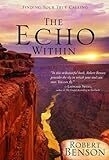 There is a particular class of inspirational book these days that you can identify on the shelf without even looking at the content. First is the book’s size - usually no larger than 5 by 8 inches. Second is the cover art - typically a scenic vista or natural landscape, meant to soothe and inspire. I didn’t get a look at the cover art before I agreed to accept a free copy of The Echo Within from Waterbrook Press and review it on my blog, but as soon as I pulled it out of the envelope, I started to wonder. Is this gonna be another one of those fluffy inspirational books?
Robert Benson is the author of over a dozen books, all of which he describes on his website as being about one thing: “paying attention”. Says Benson:
I write about paying attention for the things that can point us to the Sacred in our lives. About the longings that we have for home and community and a sense of belonging. About practice and ritual and work and contemplation and the way that such things can be constant reminders of who we are and who we are to become.
And in this little volume, as you might guess from its title, Benson urges us to listen to “the echo within” - the little voice within ourselves that gives us some inclination of choices we should make, directions we should take, things we should believe. In the first chapter he describes it this way:
I am coming to believe that the small voice within me is an echo of the Voice that is still speaking the incarnate word that I am here to become, an echo of the Voice that spoke us all into being, an echo of the Voice that spoke all that is alive.
Sometimes we are hesitant to trust that small voice within us because we think it is just ourselves doing the talking… because we have heard a similar voice inside us say things that are hurtful and angry and hateful, to ourselves and about others.
We must learn to listen deeper and deeper, seeking out the true voice within us that echoes the Voice of the One Who made us…
The fact that the Voice that calls to us often sounds like our own is not something to be mistrusted or feared. It is a sign of how close God is to us.
Benson has some good insights in The Echo Within about recognizing the talents, inclinations, and desires that God has built into us - sometimes we do tend to make this whole “God’s leading” thing more difficult than it needs to be - but on the whole Benson strays just a little too far in the “listen to your inner voice” direction, with no balance of recognizing the Truth that is revealed to us in Scripture.
For the person running weary and needing some quiet encouragement, The Echo Within might be a nice little volume to pick up. Read and consider it with discernment, though. That inner voice might be God, but then again, it might not be.
2008: A Year of Reading in Review
This the only year-end post I’ll write; just a summary of my book reading list from 2008.
Some quick details:
Total Books Read: 78. This is down a bit from 86 last year.
Fiction: 57. Non-fiction: 21.
That ratio is still weighted a little heavily toward fiction, I think, but when I know how shallow and quick some of those novels were and how long and think some of the non-fiction was… well, it evens out.
Favorite novel of the year: A Prisoner of Birth by Jeffery Archer. This was far and away the best, most enjoyable story I read all year. It’s essentially a modern-day retelling of Alexandre Dumas’ The Count of Monte Cristo. What sold me on it, though, was that there were characters you could really root for. Good guys that were really good. Honorable supporting characters who remained honorable. Such a good story. I should put it on reserve at the library again.
Runner up: The Time Traveler’s Wife by Audrey Niffenegger.
Favorite non-fiction of the year: This is tough because non-fiction spans such a range of subjects. Some high points, though:
- James Van Allen: The First Eight Billion Miles by Abigail Foerstner. A biography of the Iowan who played a huge role in space exploration.
- Newjack: Guarding Sing Sing by Ted Conover. An inside look at the correctional officers who run Sing Sing prison.
- A Case for Amillennialism by Kim Riddlebarger. Quite helpful.
Worst book of the year: How Would Jesus Vote? by the late D. James Kennedy and Jerry Newcombe. I thought my blog review of it was bad until I read Ron’s review. He said, in short:
The book is awful. Simply awful. I can’t stress to you how amazingly awful this book is. Do not buy, read, or borrow this book. I will likely use my copy for kindling in the fireplace this winter.
I love Ron.
OK, that’s enough book wrap-up for this year. I’m contemplating a change in format for book reviews next year, doing a full post on each book and cross-posting them to Amazon to build a little bit of reviewing credibility there. Dunno, it’s just a thought. [No, Geof, I’m not doing it entirely because you changed the format of GNM.]
Next year’s list will still exist in some format. First book on it will be an old one by Stephen Baxter. Almost finished it for 2008, but not quite.
Trying to describe Watership Down
I finished reading Richard Adams’ Watership Down last night and, when adding it to my reading list, found it rather difficult to describe. Figuring that few of you ever look at my reading list, (which is fine,) and knowing that my attempt amused me, I thought I’d post the description here, too.
This is a hard novel to describe, not because it’s nondescript, but because short descriptions would leave out so much. It’s a story about rabbits. Let’s try this on for size: if Tolkien were to have written a story the length of one of the LotR books, and set it in modern day, and narrowed the scope from “save the world” to “find a new place to live” and written it about rabbits instead of hobbits, you might get something like Watership Down. I enjoyed it.
2007 in Books: Chris's Reading in Review
One year ago I decided that my blog was the must useful place to keep my reading list, and that proved to be a good choice. I’ve tried keeping reading lists in the past, but was never consistent in recording. This year, though, I managed to record each book and a couple sentences of synopsis and review. I don’t do much in the way of Top 10 lists, but this seems like one place where I have enough data at hand to make a year-end summary. So here goes.
Total books read: 85. Total fiction: 68. Total non-fiction: 17. Total re-reads: 1.
The one notable series for this year was Harry Potter. I managed to resist the series until this year, but finally decided it was time to give them a try. I was glad I did; they were some very entertaining reads. I started Book 1 on July 11 and finished Book 7 on August 23, and managed to sneak six other books in during that six weeks as well!
A look at my non-fiction stuff betrays my interest in history and science, with a dabbling in music. No real surprises, I guess.
My Top 5 non-fiction reads of the year, in no particular order:
- The Everlasting Man - G. K. Chesterton. This is a classic, took me a while to read, but Chesterton is worth it.
- Team of Rivals: The Political Genius of Abraham Lincoln - Doris Kearns Goodwin. Goodwin makes history interesting. Very readable, interesting insights into an amazing man.
- Chosen Soldier: The Making of a Special Forces Warrior - Dick Couch. I’m a sucker for special forces/military stuff anyway, and this is an excellent look at what the Army Special Forces folks do.
- No Ordinary Time: Franklin and Eleanor Roosevelt: The Home Front in World War II - Doris Kearns Goodwin. Got started on DKG, read a second book. Good stuff once again.
- A More Perfect Constitution: 23 Proposals to Revitalize Our Constitution and Make America a Fairer Country - Larry J. Sabato. Some very interesting ideas here, including changing the number of senators/representatives and the lengths of their term, a proposal for a single six-year (extendable to eight-year via national referendum) term for president, and others.
My top 8 fiction reads, again in no particular order (I was going to list 10, but couldn’t find two more that lived up to the standards of these 8):
- Variable Star - Robert Heinlein & Spider Robinson. The title character goes on a “galactic bender”… yeah, and it’s a great story.
- Sun of Suns (Virga, Book 1) - Karl Schroeder. Schroeder manages to create a very believable, imaginative world for his story. I’ve got book 2 sitting in my to-read pile right now. Can’t wait.
- In War Times - Kathleen Ann Goonan. Goonan combines time travel, jazz, and World War II in a way that blows my mind. Easily my favorite non-series book of the year.
- The Children of Húrin - J. R. R. Tolkien. Tolkien does the classic epic better than anyone else.
- Magic Street - Orson Scott Card. Card has a gift for storytelling and imagination. This novel weaves some of the plot and ideas of Shakespeare’s A Midsummer Night’s Dream into a delightful modern fantasy.
- Harry Potter and the Deathly Hallows (Book 7) - J. K. Rowling. I promised myself I’d only include one HP book in this list, and it had to be this one. It caps off the series brilliantly.
- Overclocked: Stories of the Future Present - Cory Doctorow. Most of the sci-fi short stories I’ve read up to this point have been older; it’s fun to read something written recently - the current-ness of the technology and ideas makes them even more believable and frightening.
- The Road - Cormac McCarthy. No, I didn’t read this one because Oprah recommended it. Andrew Peterson recommended it, too! :-) Chilling, spare, and yet ultimately hopeful.
Apparently I am a sci-fi nerd. It’s not that all I read is sci-fi… I guess those just stick out the most to me.
I’ll start a new list for 2008 once I finish my first book. Gotta see how my reading preferences change from year to year.
A time to read...
A month ago today I resolved I was going to put down my endless string of library books and spend a month just reading the Bible. Today is the end of that month.
April 20 I started reading in Genesis 1 and decided I’d just read through, getting a feel for the breadth of the story. A month later I’m through the book of Ezra, maybe a third of the way through the whole Book if you just look at how many pages I’ve covered. It’s been good reading and good reminder.
There have been some times I’ve really missed having some other good book to read - most notably the hours I was on an airplane traveling to Salt Lake City and back, and occasionally in the evenings when something less-than-memorable is on TV and I’m in the habit of reading while the TV’s on.
I think it was a worthwhile exercise, though. It made me more convinced that I need to focus on reading quality books, things that will be worth my time, and avoid just rushing through a long string of mediocre titles just to max out my reading list. (I know there’s no way my list will be as long as Kari’s - no sense in going crazy trying.)
I’m going to be done with work a little big early today. I’m going to suggest to Becky that we make an “overdue” stop at the library. :-)
You'd think I'd learn...
I stopped at the library yesterday afternoon to pick up a book I had reserved. (Velvet Elvis by Rob Bell, yes, Heather, I’m finally getting around to reading it.) And of course, even with my book backlog, I couldn’t stop with just that one book - I had to pick up two more while I was at it. My book pile next to my bed has gotten large. Very large. From memory, here’s what’s sitting there waiting to be read:
- This is Your Brain on Music - Daniel Levitin - a fascinating book about how our brains deal with and remember music. I’m about 2/3 done with this one.
- Submarines: A History - I forget the author. I started this one before I bought the previous title. It’s in progress as well.
- Traitor - Stephen Coonts - I enjoy Coonts, this appears to be his latest.
- Velvet Elvis - Rob Bell - Just picked it up. This will be the next one I start.
- The Ragtime Club? - some random novel I picked up yesterday, deals with Scott Joplin and the ragtime music scene. Looks mildly interesting.
- Team of Rivals: The Political Genius of Abraham Lincoln - Doris Kearns Goodwin - my mom recommended this one. Should be interesting.
- The Republic - Plato - picked this one up with a Christmas gift card.
- The Everlasting Man - G. K. Chesterton - This one is in progress as well - good stuff, but slow going.
- Beyond All Earthly Powers - David Wells - a freebie for attending the Desiring God 2006 conference.
- Lectures to my Students - Spurgeon - Bought at the DG2006 conference, read the first few chapters, it’s still sitting there.
- Looking Unto Jesus - Isaac Ambrose - my dad gave me this one a couple of years ago - I have started on it several times and never finished. Slow going, but good stuff.
There may be a few others, that’s just all I can think of for now.
[Checked tonight when I got home - found I’d missed a couple: What I Saw At The Revolution by Peggy Noonan and Case Closed by Gerald Posner. I guess I’ve got even *more* reading to do. :sigh:
Pick Chris's Reading List: Taliesin (Book 1 of the Pendragon Cycle)
On to a book recommended by Nate Downey: Taliesin by Stephen Lawhead, which is book one of five books in Lawhead’s Pendragon Cycle.
I read Taliesin over Christmas break. My first surprise was when I looked at the publisher’s page in the front of the book and saw it was published by CrossWay Books, which is a Christian publishing house. “UhOh”, I thought… “I hope this isn’t going to be some silly Christian novel trying to masquerade as fantasy.” But I had faith in Nate’s selection, so I read on. And I was not let down.
The Pendragon Cycle deals with the Arthurian legend, trying to flesh out the story and put faces on the people. Taliesin is a great deal of back story; it follows the lives of a young lord in England and a princess of Atlantis who end up marrying; they have a child named Merlin who ends up being, well, that Merlin. Along the way there is a typical amount of fantasy-type plot: we see Atlantis’ destruction, intrigue, rivalry, and warfare between the various clans, and the introduction of some early Christian missionaries.
It was that last bit that started to get me worried. The missionaries are introduced about two-thirds of the way through the book, and while on one hand I know that the Arthurian legend needs to have a Christian component (he does seek the Holy Grail, after all), I was worried that it might turn from a decent novel into an evangelistic enterprise quicker than you can say Pendragon. But the author handles it well; he allows the characters to become Christians and wrestle with Christian ideas while avoiding the trap of having them give long speeches about how everyone should come to Jesus and the like.
I really enjoyed Taliesin - thanks, Nate! I will now have to reserve book two from the library when I get a chance.
Pick Chris's Reading List
Those of you who know me know that I am a voracious reader. (Those of you who don’t know me just found out.) Every night for many years I have spent my last waking hour in bed reading some book or another. (If the book is too interesting, I spend a few of my last waking hours in bed… and often end up short on sleep as a result.) I enjoy many genres, but find myself most drawn to history, theology, science fiction (but not the fantasy branch of sci-fi so much), and then military/adventure novels. I was big into Tom Clancy as a kid, and branched out to similar authors when Clancy’s pen dried up.
I average 1 or 2 books per week, depending on how busy my week is. Lately, though, I have become weary of my regular diet of mindless adventure. Much of it is tired retreads. I feel like I’m wasting my time. Back at the DG2006 conference I bought G. K. Chesterton’s The Everlasting Man and I’m enjoying it quite a lot. But it, too, will soon join the ranks of books I’ve already read, and I’ll be looking for something else.
So here’s the deal. Do you have any books to recommend that I read? They could be fiction, non-fiction, whatever. Just something you think I’d enjoy or benefit from. Leave a comment with the name and author of the book. In return, I will find them at the local library, read them, and then post my thoughts about the book. Sound like a plan?
BookJournal: Xenocide
I haven’t been a fan of everything Orson Scott Card has ever written (sorry, Keith), but my love for Ender’s Game and even greater affection for Speaker for the Dead drew me to read the next book in the series, Xenocide.
Xenocide picks up Ender and company pretty much where Speaker for the Dead left them. It introduces us to a few new characters along the way, but wrestles with the dilemma of being on a planet where saving the humans there will cause the death of the indigenous species. Card pulls off this drama in his usual thoughtful fashion, asking questions about the nature of life and consciousness.
I don’t know that this one was quite as good as Speaker. I got a bit lost at the end once they start doing faster-than-light travel. It just got weird there for the last chapter or so. But still, if you’ve enjoyed Ender and Speaker, I can definitely recommend that you continue on and read Xenocide.