
Category: Longform
You are viewing all posts from this category, beginning with the most recent.
A good word from Jonathan Martin
From a recent sermon on his Son of a Preacher Man podcast:
The fake good news only sounds like good news to me and my tribe. The fake good news only sounds like good news if you go to my church. If they’re in another village, it’s bad news for them. But the real good news is not just good news for us, it’s good news for them.
It’s a sermon worth 40 minutes of your time.
You are always more ready to hear than we are to pray...
Wow, Proper 22 from the BCP this week:
Almighty and everlasting God, you are always more ready to hear than we to pray, and to give more than we either desire or deserve: Pour upon us the abundance of your mercy, forgiving us of those things of which our conscience is afraid, and giving us those good things for which we are not worth to ask, except through the merits and mediation of Jesus Christ our Savior; who lives and reigns with you and the Holy Spirit, one God, for ever and ever. Amen.
Being Christians above all else
Really good piece from Father Thomas McKenzie yesterday about living as a Christian in these divided American times. This bit is worth it alone:
Have your political opinions. Seriously, you have the right to your opinions. You also have the right to voice them. Remember that other people have the same right. Challenge your own opinion. Where does your opinion match up with Scripture or the teachings of the Church. How does Jesus inform your opinion? Be humble enough to change your mind to match your faith. Because someone has a different opinion, they are not your enemy. They aren’t stupid, heartless, or evil. They are likely a normal person, a sinner, just like you. They may well be someone who loves Jesus, someone you’ll live with forever in Heaven. Treat them as you would like to be treated, remembering Jesus words to “love your neighbor as you love yourself,” and “do to others as you would have them do to you.”
His call for us to be Christians first, striving for healing and peace above all else, is a challenge to me. Worth reading the whole thing.
Social media exhausted me again
Social media exhausted me again.
If I’m more self-reflective I guess I have to say I exhausted myself on social media again.
Back a year ago in November I did a social media fast. For two months I was off Facebook and Twitter altogether. When I came back to it I pared back my Twitter follows, from ~600 to ~300.
In March, after the latest Facebook privacy mess, I decided it was time to be done with Facebook. And so I deactivated my Facebook account.
But over the last few months I’ve let them sneak back up on me.
I had the best intentions - my church’s online community (mid-week announcements, reminders, prayer requests, etc) are all on a closed Facebook group. I also enjoy the Christ and Pop Culture Facebook group. But it turns out I don’t really enjoy Facebook that much, and if I have it on my phone it keeps sucking me in.

Twitter I’m more attached to. I have friends that I’ve made and kept in contact with almost exclusively on social media, and I keep thinking how much I don’t want to lose track of them. But then Geof deleted his Twitter account, and Stephen and Misty are rarely on it anymore, and Dan much more rarely, and John almost never. I feel there’s an opportunity here to still have interaction with online and distant friends… but we’ve apparently all decided as a group that Facebook and Twitter aren’t the right thing for it anymore. (If you guys are all running some Friends and Family Slack group and you haven’t invited me…)
I still do find some value on Twitter, but I’ve gotta cut my follows hard again. The Kavanaugh thing sucked me in again to where politics attained an outsized priority compared to everything else. I know better… but wow it sucks me in.
So, here’s to less frenzy on social media, and more focus on things that matter (acknowledging that some of those things might actually still happen on social media!). Maybe I’ll do some more blogging. And if we need to resurrect a phpBB forum or something to interact with distant friends, maybe let’s do that, eh?
Three dimensions of salvation by allegiance
I’m reading Matthew W. Bates’ Salvation By Allegiance Alone this week, in which he argues that the word the Apostle Paul uses that is usually translated “faith” (pistis in the Greek) is better understood as “allegiance” in relationship to salvation. It’s an interesting way to look at things.
Bates argues that the essential proclamation of the Gospel in the NT doesn’t culminate in Jesus’ death and resurrection but rather continues to his ascension and reign as king and lord. He outlines it in eight points:
Jesus the king
- Preexisted with the Father,
- Took on human flesh, fulfilling God’s promises to David,
- Died for sins in accordance with the scriptures,
- Was buried,
- Was raised on the third day in accordance with the Scriptures,
- Appeared to many,
- Is seated at the right hand of God as Lord, and
- Will come again as judge.
This is pretty well in line with NT Wright, not an uncommon take. Bates then outlines three “dimensions” of allegiance that he contends are components of salvific allegiance:
- Intellectual agreement - basic assent that those eight components of the Gospel are true statements;
- Confession of Loyalty - leaning heavily on Romans 10:9-10 here
- Embodied fidelity - what he describes as “practical fidelity” to Jesus as Lord, referencing heavily to Matthew 7 and the “not everyone who says to me ‘Lord, Lord’” text.
None of this appears to be hugely controversial at this point, but the reframing is helpful to me to get my head around how we might articulate salvation by grace through faith and yet still say that faith without works is dead.
More to come, I’m sure.
What are Evangelicals afraid of losing?
Dr. Michael Horton has a wise piece on CT in response to President Trump’s comments to evangelical leaders that they are “one election away from losing everything”.
Nowhere in the New Testament are Christians called to avoid the responsibilities of our temporary citizenship, even though our ultimate citizenship is in heaven (Phil. 3:20). However, many of us sound like we’ve staked everything not only on constitutional freedoms but also on social respect, acceptance, and even power. But that comes at the cost of confusing the gospel with Christian nationalism. … Anyone who believes, much less preaches, that evangelical Christians are “one election away from losing everything” in November has forgotten how to sing the psalmist’s warning, “Do not put your trust in princes, in human beings, who cannot save” (Ps. 146:3).
That’ll preach.
-- What are Evangelicals Afraid of Losing? - Christianity Today
Finished reading: 2018, part five
My reading has apparently slowed down a bit this summer. Still, there’s been some good stuff recently:
Well, first an intro to the first two books. I heard Brad Jersak speak at the Water to Wine Gathering back in June - what a treat. Brad is a Canadian pastor and author, more recent convert to Orthodoxy, and spent many years in pastoral ministry working with the mentally challenged and the poor. He’s funny, wise, and kind… and I’ll pick up whatever book he writes next.
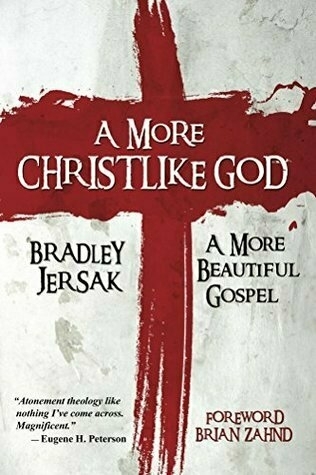
A More Christlike God: A More Beautiful Gospel by Bradley Jersak If Christ is the truest expression of what God is like, what does that really mean? How should we then think about God? Jersak is no fan of the “loving Son protects us from the wrath of the angry Father” picture, and instead works through what it looks like to think that Jesus is what God the Father is like.
Her Gates Will Never Be Shut: Hell, Hope, and the New Jerusalem by Bradley Jersak Here Jersak takes a careful look at the Biblical texts about heaven and hell and judgment. While it seems he can’t quite bring himself to become a universalist, he makes a strong case for the potential that heaven will be much fuller, and hell much emptier, than my traditional evangelical upbringing taught me to expect. And I like the hopeful view. If there’s a reasonable case for being hopeful, why not be hopeful?
Ninefox Gambit by Yoon Ha Lee Hugo-winning sci-fi to change things up. A decent story, nothing amazing but entertaining enough.
Adjustment Day by Chuck Palahniuk I picked this one off the library shelf on a whim and ended up not really liking it that much. Brutal, pessimistic, dark… No time for that nonsense.
Salt: A World History by Mark Kurlansky Kurlansky tracks the usage of salt through history. The book is more interesting when it focuses on ancient times, and progressively less interesting as it reaches the modern day. Also there were far more recipes for salting foods included than I will really ever need.
The Fire Next Time by James Baldwin A classic from Baldwin, and the first I’ve read of him. What a writer! Beautifully written with a powerful message.
The Crimson Petal and the White by Michel Faber Picked this one up after @johnthelutheran raved about it. I’d previously read Faber’s Book of Strange New Things and enjoyed it. The Crimson Petal and the White was something completely different - a Victorian novel that reminded me a good bit of Dickens - but it kept me interested all the way through.