
Category: Longform
You are viewing all posts from this category, beginning with the most recent.
Finished reading: How to Watch a Movie by David Thomson
I picked up David Thomson’s How to Watch a Movie on a whim from my local library shelf knowing nothing about it or Thomson. You can’t really call me a movie buff - I just don’t have time to watch many movies - but I really enjoy watching them when I get the chance, and I love listening to smart people talk about movies. (The Filmspotting podcast has been at the top of my must-listen list for at least the past 5 years.)
So for my interest in movies, I haven’t (to my recollection) read any books about them.
And, (spoiler alert?) if you’re in my shoes, I wouldn’t recommend this one.
Maybe it’s brilliant and I just need to read 10 other books to get ready for it, but I don’t think so. In 200 pages Thomson talks about different aspects of film-making and film-watching and manages to come across as a pompous snob. I pushed on through because it was short and I wasn’t ready to start my “nope” list on Goodreads quite yet.
So, I need to find some better books on film. Which jogs my memory - the Filmspotting guys did an episode recently where they listed their top 5 film books. Guess I should’ve paid more attention. Maybe I’ll give it another listen.
Meador: on Intervarsity and Black Lives Matter
Jake Meador over at Mere O has a really good piece today on the white evangelical response to the messages at Urbana last month, and more generally to the Black Lives Matter movement:
We do not have to endorse everything about the organization Black Lives Matter. We shouldn’t feel like we cannot ask questions—even critical questions—about speeches like the one given by Michelle. But we also should not be instinctively suspicious of the claims of our black neighbors. Our nation’s history is such that we should have no difficulty believing our black neighbors when they tell us about what life is like for black people in America today. Indeed, given our nation’s appalling history it would be more surprising if they didn’t have any problems.
Definitely worth reading the whole thing.
Finished reading: Hackers by Steven Levy
I hadn’t heard of this one prior to listening to an Incomparable podcast episode last year - for the life of me I can’t figure out which one - but it stocked my Amazon wish list with several tech history books, which my mother-in-law then generously gave me for Christmas.
In Hackers: Heroes of the Computer Revolution, Levy tells the story of software hackers who for the most part aren’t household names. Sure, there are quick mentions of Jobs, Wozniak, and Gates, but there are a dozen others you’ve never heard of who are similarly fascinating.
Levy talks quite a bit about the hacker ethos and principles that were pervasive from the early 1960s until, well, business and money got significantly involved in the late 1970s. It was a fun read for me since I recognize my own potential to become one of these heads-down, computer-obsessed hackers who barely notices when the sun rises or sets. (A course I have thankfully avoided thus far… for which my wife is both thankful and probably largely responsible.)
Yes, I’m shamelessly picking up John Halton’s habit of blogging reading progress this year, if for no other reason than it gives me 60+ additional posts a year… and maybe give a reader a good recommendation for a book to read. (Or to stay away from!)
My 2015 Reading Year in Review
2015 was another enjoyable year of reading for me, and with books tracked as usual on Goodreads, here’s a short summary:
Total books read: 62. That’s less than last year, but more than each of the three years before that. Fairly average for me.
Fiction/non-fiction: 36 / 26.

Fiction:
- Harry Potter and the Half-Blood Prince (Harry Potter #6) (Rowling, J.K.) re-read w/ the kids
- Harry Potter and the Deathly Hallows (Harry Potter #7) (Rowling, J.K.) re-read w/ the kids
- Kristin Lavransdatter (Kristin Lavransdatter, #1-3) (Undset, Sigrid) Epic. Long. Mostly worth it.
- Station Eleven (Mandel, Emily St. John) excellent
- Spark (Hawks, John Twelve)
- Empire (The Chronicles of the Invaders, #2) (Connolly, John)
- Satin Island (McCarthy, Tom)
- City of Savages (Kelly, Lee)
- The Great Zoo of China (Reilly, Matthew)
- Fall of Giants (The Century Trilogy, #1) (Follett, Ken)
- Winter of the World (The Century Trilogy #2) (Follett, Ken)
- Edge of Eternity (The Century Trilogy, #3) (Follett, Ken)
- No Fortunate Son (Pike Logan, #7) (Taylor, Brad)
- Mightier Than the Sword (The Clifton Chronicles, #5) (Archer, Jeffrey)
- Seveneves (Stephenson, Neal)
- The Goblin Emperor (Addison, Katherine) an unanticipated favorite
- Tin Men (Golden, Christopher)
- Iron Wolf (Brown, Dale)
- Ghost Fleet: A Novel of the Next World War (Singer, P.W.)
- The Three-Body Problem (Three-Body, #1) (Cixin, Liu)
- The Dark Forest (Three-Body, #2) (Cixin, Liu) dense but really enjoyable sci-fi
- The Martian (Weir, Andy) fine but don’t buy all the hype
- The Name of the Wind (The Kingkiller Chronicle, #1) (Rothfuss, Patrick)
- Invasion of Privacy (Reich, Christopher)
- The Water Knife (Bacigalupi, Paolo)
- The Library at Mount Char (Hawkins, Scott)
- The Governor’s Wife: A novel (Harvey, Michael)
- My Struggle: Book 1 (Knausgård, Karl Ove) strangely fascinating
- Without Remorse (John Clark, #1) (Clancy, Tom) re-read for the first time in 20 years
- Neverwhere (Gaiman, Neil)
- Zero World (Hough, Jason M.)
- Tenacity: A Thriller (Law, J.S.)
- Dark Corners (Rendell, Ruth)
- Werewolf Cop (Klavan, Andrew)
- Saturn Run (Sandford, John)
Non-Fiction:
-
The Origins of Political Order: From Prehuman Times to the French Revolution (Fukuyama, Francis)
-
Alan Turing: The Enigma (Hodges, Andrew)
-
Fields of Blood: Religion and the History of Violence (Armstrong, Karen)
-
Words Without Music: A Memoir (Glass, Philip)
-
The Big Short: Inside the Doomsday Machine (Lewis, Michael)
-
1491: New Revelations of the Americas Before Columbus (Mann, Charles C.)
-
Einstein’s Dice and Schrödinger’s Cat: How Two Great Minds Battled Quantum Randomness to Create a Unified Theory of Physics (Halpern, Paul)
-
Legacy of Ashes: The History of the CIA (Weiner, Tim)
-
Between the World and Me (Coates, Ta-Nehisi) deserves every accolade it gets
-
The Life and Times of the Thunderbolt Kid: A Memoir (Bryson, Bill)
-
Leaders Ought to Know: 11 Ground Rules for Common Sense Leadership (Hooser, Phillip Van)
-
Showdown: Thurgood Marshall and the Supreme Court Nomination That Changed America (Haygood, Will)
-
The Fellowship: The Literary Lives of the Inklings: J.R.R. Tolkien, C. S. Lewis, Owen Barfield, Charles Williams (Zaleski, Philip) a good warts-and-all history of the Inklings.
-
The Court and the World: American Law and the New Global Realities (Breyer, Stephen G.)
-
Pacific: Silicon Chips and Surfboards, Coral Reefs and Atom Bombs, Brutal Dictators, Fading Empires, and the Coming Collision of the World’s Superpowers (Winchester, Simon)
-
The Speechwriter: A Brief Education in Politics (Swaim, Barton)
-
Alexander Hamilton (Chernow, Ron) Because Hamilton, obviously.
-
Free of Charge: Giving and Forgiving in a Culture Stripped of Grace (Volf, Miroslav)
-
Let Your Life Speak: Listening for the Voice of Vocation (Palmer, Parker J.)
-
The Lion’s World: A journey into the heart of Narnia (Williams, Rowan)
-
Secondhand Jesus: Trading Rumors of God for a Firsthand Faith (Packiam, Glenn)
-
Desiring the Kingdom: Worship, Worldview, and Cultural Formation (Smith, James K.A.)
-
Everything Belongs: The Gift of Contemplative Prayer (Rohr, Richard)
-
Falling Upward: A Spirituality for the Two Halves of Life (Rohr, Richard)
-
The Enneagram: A Christian Perspective (Rohr, Richard)
-
Malestrom: Manhood Swept into the Currents of a Changing World (James, Carolyn Custis)
-
Spiritual Friendship (Hill, Wesley) Worth reading, and then reading again.
Worked on, but didn’t finish yet:
- Paul and the Faithfulness of God (Wright, N.T.) I’m about half-way through volume one. Slow going.
Miscellaneous thoughts:
- Won the “buy it for Dad for Christmas” award: Desiring the Kingdom by James K.A. Smith.
- I’m honestly surprised by how little theology I read this year. Seems like a lot less than previous years. Guess maybe I was ready for a break.
- Size of my unread book pile at the moment: embarrassingly large. Got 4 new books for Christmas. Added them to the pile. It’s possible that by spring I’ll need to go on another “no books from the library until the pile goes down” pledge. We’ll see.
Do you have any recommendations for 2016 reading?
Finished reading: Saturn Run
So here’s an idea: a sci-fi novel written by somebody who can actually write, with the physics and science worked out by a real nerd sidekick. That’s what you get from [Saturn Run](Saturn Run www.amazon.com/dp/039917…) by novelist John Sanford with help from sci-if nerd Ctein. Saturn Run is the book The Martian wishes it could be if Andy Weir had a talent for prose. Great way to wind up my year of reading.
Richard Causton, George Szirtes - The Flight
For the past hour or so on this Christmas Eve morning we’ve been listening to the Nine Lessons and Carols service live on the BBC from Kings College Chapel in Cambridge. Beautiful stuff as you would expect - lovely choir, big organ, lots of scripture readings.
In addition to the traditional carols, though, there was a new carol, commissioned for this service. The text is from poet George Szirtes, with music by Richard Causton. It’s called The Flight.
The child on the dirt path finds the highway blocked The dogs at the entrance snarl that doors are locked The great god of kindness has his kindness mocked May those who travel light Find shelter on the flight May Bethlehem Give rest to them. The sea is a graveyard the beach is dry bones the child at the station is pelted with stones the cop stands impassive the ambulance drones We sleep then awaken we rest on the way our sleep might be troubled but hope is our day we move on for ever like children astray We move on for ever our feet leave no mark you won’t hear our voices once we’re in the dark but here is our fire this child is our spark.
Powerful stuff this Christmas.
Hamilton
It’s been a while since I’ve had a record catch my attention and get stuck in my head like Hamilton has over the past couple of weeks. If you follow me on Twitter or Facebook you’re already probably tired of hearing about it. But in the spirit of it’s-still-stuck-in-my-head-and-I-want-to-talk-about-it, I’m writing a blog post in the hopes of reaching a few folks who wouldn’t likely otherwise familiarize themselves with it.
On the face of it, the summary of this new Broadway musical sounds, frankly, bizarre: a rap/hip-hop musical, featuring nearly all non-white actors, about the life of American Founding Father Alexander Hamilton.
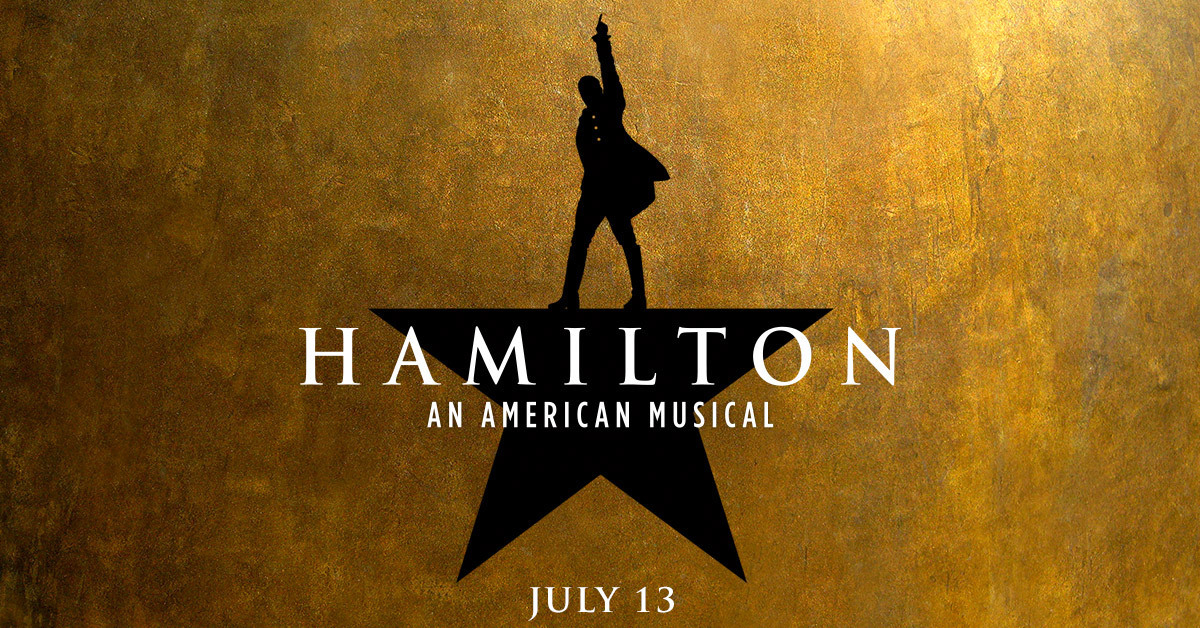
To Hamilton’s writer/composer, though, it makes perfect sense. Lin-Manuel Miranda, a thirty-something New Yorker and son of Puerto Rican immigrants, sees Hamilton’s story as a classic immigrant story. Born in the Caribbean, no father around, mother died when he was young. Immigrated to America, and with great ambition and drive played a significant hand in the founding of the USA, only to die in a duel at the hand of Vice President and long-time rival Aaron Burr. So why wouldn’t you tell this story?
Miranda gave an early performance of what would become the opening song of the musical at a White House evening of poetry, music, and spoken word back in 2009. (He was invited after penning his first musical, the Tony Award-winning In The Heights.) You can see the range of reactions in this video: at first, everybody chuckles at the idea of a hip-hop album about Alexander Hamilton. But 4 minutes in, he’s really good, and they’re hooked.
After hearing friends rave about Hamilton for a few days I went ahead and bought the cast recording. It’s clear at once that Hamilton is serious story telling. It’s not played for laughs or trying to highlight the incongruity of a Hispanic man in the lead and African Americans playing Burr, Thomas Jefferson, and George Washington. After 10 minutes you’ll buy into the idea, and by the end of the musical you’ll have a new perspective on immigrants shaping our country in its infancy.
What grabbed me first about Hamilton was the lyrics. I’ve always been a fan of smart wordplay, whether it be in silly family pun battles, Mel Brooks lyrics, Andrew Peterson songs, or Danny Kaye movies. And in Hamilton they’re smart, and they’re incessant. In the Alexander Hamilton character’s introductory song “My Shot”, he raps without hardly taking a breath, about his plight as a new immigrant:
I’m ‘a get a scholarship to King’s College. I prob’ly shouldn’t brag, but dag, I amaze and astonish. The problem is I got a lot of brains but no polish. I gotta holler just to be heard. With every word, I drop knowledge! I’m a diamond in the rough, a shiny piece of coal tryin’ to reach my goal. My power of speech:unimpeachable. Only nineteen but my mind is older. These New York City streets get colder, I shoulder ev’ry burden, ev’ry disadvantage I have learned to manage, I don’t have a gun to brandish, I walk these streets famished.
The musical traces Hamilton’s life through his move to America, his marriage to Eliza Schuyler, his involvement in the revolution and the founding of the country, his writing of many of the Federalist Papers, the affair that most likely cost him a shot at the presidency, the untimely death of his son, and his final showdown with Burr.
This bit from CBS Sunday Morning back in March is a nice brief overview of Hamilton the man, Hamilton the show, and the magnetic and clearly brilliant Lin-Manuel Miranda.
If you’re mildly interested by this point, I’d recommend checking out the cast album. (It’s up on YouTube to stream if you’re not ready to commit to a purchase.) It’s possible it won’t be your thing - Hamilton is currently sold out for goodness knows how long at the Richard Rodgers Theater on Broadway, but your standard Rodgers & Hammerstein musical it ain’t - but if you can immerse yourself in it for an hour or two I don’t think you’ll regret it.
As a footnote: my friend Bethany pointed me toward the #ParksAndHam mashup on Twitter, wherein folks are combining Hamilton quotes with pictures from Parks and Recreation. If you’re a fan of Parks and Rec, there are some pretty great ones out there.
The Worship Industry is "Killing Worship"?
Self-described post-evangelical (and Methodist worship pastor) Jonathan Aigner wrote on Patheos recently on “8 Reasons the Worship Industry Is Killing Worship”. I both resonated and disagreed with enough of his post that I figure it’s worth a short response.
Aigner’s eight points, with my thoughts interspersed:
1. It’s [sic] sole purpose is to make us feel something.
Aigner says that the worship industry “must engage us on a purely sensory level to find widespread appeal…”
I’ll agree with Aigner here on the overall concept and disagree with him on the breadth of his statements. Does the worship industry rely too heavily on the sensory level to get us engaged? Probably, yeah. But is it affecting us “purely on an emotional level”, as he claims? I won’t go that far.
2. The industry hijacks worship.
“When the mind is disengaged and worship is reduced to an emotional experience,”, says Aigner, “worship descends into narcissistic and self-referential meaninglessness.” This point relies on your accepting his point #1, so given that I’ve only partially granted it, I’m on the fence here, too. When worship music completely disengages the brain and works solely on emotion, I’d agree that it becomes fairly meaningless. But I don’t think that’s happening quite as broadly as he asserts.
3. It says that music IS worship.
Now we’re finding common ground. In our current evangelical mindset, “worship” is too often just the music part of the service, to be joined up with “announcements”, “preaching”, etc. Our thoughtful members would probably nuance the definition if asked, but it’s very easy for anyone, including myself, when leading worship music in the service (see how I just slipped into it there?), to lazily allow just the music to be referred to as “worship”.
4. It’s a derivative of mainstream commercial music.
Yes… but.
As my wife can attest, I have gone off on many a rant about how Christian music so obviously follows mainstream music, just 5 years behind.
Say, for example, when I saw Chris Tomlin’s video of his song “God’s Great Dance Floor” (a concept that I don’t even really want to explore from a theological standpoint, but that’s beside the point), where he matches Coldplay’s Chris Martin in musical style, jacket, and even awkward white-guy dancing.
Or when I realized circa 2012 that DC*Talk’s “Jesus Freak” copied Nirvana’s “Smells Like Teen Spirit” down to the same chord sequence for the intro. (Points to the late Kurt Cobain for at least not adding a rap about a belly jiggling and ‘a typical tattoo green’.)
But on the other hand… all music is derivative. Commercial music just like church music. For every truly groundbreaking artist you will find a dozen knock-offs popping up a few years later. History has a way of preserving the good ones and weeding out the bad ones. So while some music is so derivative of better mainstream versions that you just have to avoid it, being derivative, by itself, isn’t killing us.
5. It perpetuates an awkward contemporary Christian media subculture.
“[Christian worship music] can’t possibly find itself in Bernstein’s five percent because it’s too busy talking about how “Christian” it is, instead of telling the story.
That’ll preach.
6. It spreads bad theology.
I’m sympathetic here, too, but this is not a factor unique to modern church music. Again, history has a way of weeding out the really atrocious stuff, but you will find theological nightmares in classic hymnody, and you will find beautiful pieces of good theology in modern songs.
7. It creates worship superstars
Aigner clarifies that he’s really complaining about the rock star persona many worship artists take on and the fandom that grows from it. And he’s got a decent point. “We the church become an audience. Groupies. Screaming teenagers for Jesus.” Yep.
That being said, when I hear “worship superstars”, my first thoughts run along the lines of Charles Wesley, Fanny Crosby, Isaac Watts, J.S. Bach… We all have our superstars. The modern ones just have to deal with the modern trappings of celebrity that go along with fandom in this culture.
8. It’s made music into a substitute Eucharist.
Here’s where I think Aigner has a point that’s well worth considering - not necessarily as much for how it critiques our value of the music as it does our value of the Eucharist. I’ll quote him at length:
Most evangelicals, along with the mainline Protestants who are looking to commercial Christian music as an institutional life preserver, use music as if it were a sacrament. Through their music, they allow themselves to be carried away on an emotional level into a perceived sensory connection with the divine. Music is their bread and wine. Don’t believe me? Try telling your church, your pastor even, that we should make a switch. Let’s have Communion ever week, and music once a month (or where I come from, once a quarter). It probably won’t go over well.
That point hits home in my third-Sunday-of-odd-numbered-months-practicing church.
Overall, I appreciate Aigner and people in his camp pushing us toward theological excellence, away from the celebrity worship culture, and toward the Eucharist. On the whole, though, his discussion points might still need some work.
Beck: Let Us Be the Heart Of the Church Rather Than the Amygdala
A really good reminder from Richard Beck today:
…it struck me how emotionally reactive we are to social media, our feelings getting jerked around by the latest thing that breaks on Twitter or Facebook. Sometimes it is happiness and euphoria. Yay, our side is winning! Sometimes it is despondency and despair. Oh no, the other side is winning! … So let’s remember the wisdom of Thérèse of Lisieux. Our vocation is to be the heart of the church, not the amygdala.
Yes and amen.
Now this is good news!
A proclamation of the Gospel that I love and seems timely:
The joy of the gospel fills the hearts and lives of all who encounter Jesus. Those who accept his offer of salvation are set free from sin, sorrow, inner emptiness and loneliness. With Christ joy is constantly born anew…
The great danger in today’s world, pervaded as it is by consumerism, is the desolation and anguish born of a complacent yet covetous heart, the feverish pursuit of frivolous pleasures, and a blunted conscience. […] God’s voice is no longer heard, the quiet joy of his love is no longer felt, and the desire to do good fades. This is a very real danger for believers too. Many fall prey to it, and end up resentful, angry and listless. That is no way to live a dignified and fulfilled life; it is not God’s will for us, nor is it the life in the Spirit which has its source in the heart of the risen Christ.
I invite all Christians, everywhere, at this very moment, to a renewed personal encounter with Jesus Christ, or at least an openness to letting him encounter them; I ask all of you to do this unfailingly each day. No one should think that this invitation is not meant for him or her, since “no one is excluded from the joy brought by the Lord”. The Lord does not disappoint those who take this risk; whenever we take a step towards Jesus, we come to realize that he is already there, waiting for us with open arms. Now is the time to say to Jesus: “Lord, I have let myself be deceived; in a thousand ways I have shunned your love, yet here I am once more, to renew my covenant with you. I need you. Save me once again, Lord, take me once more into your redeeming embrace”. How good it feels to come back to him whenever we are lost! Let me say this once more: God never tires of forgiving us; we are the ones who tire of seeking his mercy….
The Gospel, radiant with the glory of Christ’s cross, constantly invites us to rejoice… Why should we not also enter into this great stream of joy?
There are Christians whose lives seem like Lent without Easter. I realize of course that joy is not expressed the same way at all times in life, especially at moments of great difficulty. Joy adapts and changes, but it always endures, even as a flicker of light born of our personal certainty that, when everything is said and done, we are infinitely loved. I understand the grief of people who have to endure great suffering, yet slowly but surely we all have to let the joy of faith slowly revive as a quiet yet firm trust, even amid the greatest distress: “My soul is bereft of peace; I have forgotten what happiness is… But this I call to mind, and therefore I have hope: the steadfast love of the Lord never ceases, his mercies never come to an end; they are new every morning. Great is your faithfulness… It is good that one should wait quietly for the salvation of the Lord” (Lam 3:17, 21-23, 26).
I never tire of repeating those words … which take us to the very heart of the Gospel: “Being a Christian is not the result of an ethical choice or a lofty idea, but the encounter with an event, a person, which gives life a new horizon and a decisive direction”.
Thanks solely to this encounter – or renewed encounter – with God’s love, which blossoms into an enriching friendship, we are liberated from our narrowness and self-absorption. We become fully human when we become more than human, when we let God bring us beyond ourselves in order to attain the fullest truth of our being. Here we find the source and inspiration of all our efforts at evangelization. For if we have received the love which restores meaning to our lives, how can we fail to share that love with others?
That’ll preach.
[Disclaimer: I didn’t write this.]