
Category: Longform
You are viewing all posts from this category, beginning with the most recent.
Knives Out
Took the family to see Rian Johnson’s latest film, Knives Out, this afternoon. I know Johnson is a big-name filmmaker at this point - writing and directing an episode of the Star Wars franchise will do that for you. But I still feel like I knew him back when, thanks to the guys on the Filmspotting podcast championing his work from the very beginning. Having watched Brick, The Brothers Bloom, and Looper, I had a good feeling about The Last Jedi, and when Knives Out was announced, I was ready to buy tickets immediately.
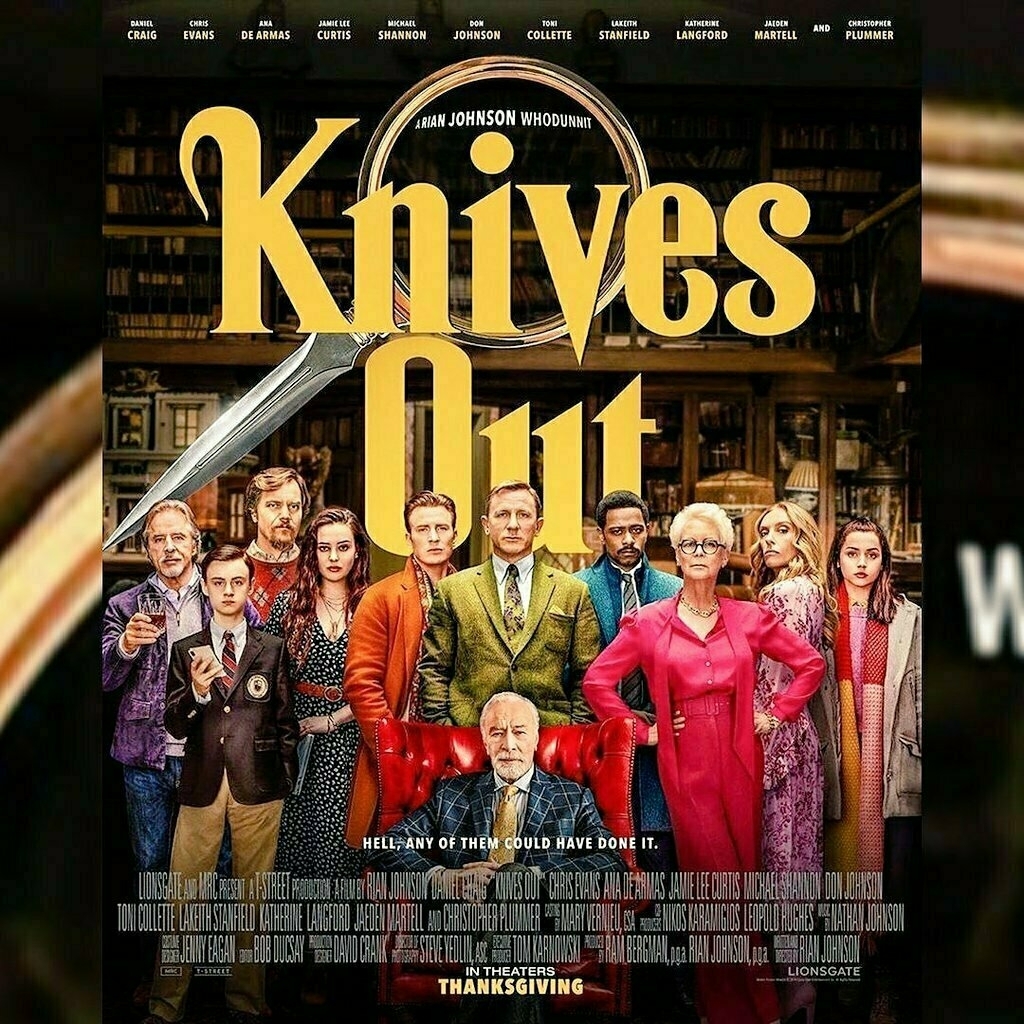
Knives Out is Johnson’s take on the whodunnit genre, a la Agatha Christie. That means to avoid spoilers I shouldn’t really say anything more about it. But I have a few non-spoilery thoughts.
First: Rian Johnson is a master of taking genre movies bending the genre ever so slightly for a knowing audience. He did it with film noir in Brick, and with time travel movies in Looper. Suffice to say he does it again masterfully here in Knives Out.
Second: That closing shot is the best I’ve seen in years. It’s just perfect.
Finally: now knowing how it ends, I really want to go watch it again to see how much it telegraphed early on that I completely missed. Johnson is careful enough that I doubt there are many (any) loose ends.
Frozen II: A Very 2019 Movie
It’s been just long enough since the original Frozen came out, and my girls have aged just enough, that we didn’t end up at the theater on opening night for Frozen II. But by Sunday afternoon we decided to brave the horde of preschoolers and their parents. The older two probably felt a little too old for it. The youngest, though, was first in line to get in the theater door, and was on the edge of her seat in excitement for the whole show.

Frozen II is quite clearly a Disney mega-picture. More of what worked from the first one: comical Olaf the snowman; genial Kristof voicing his reindeer’s thoughts; the briefest cameo from Oaken who has exited the spa and is now giving manicures. The new songs weren’t as catchy as those from the original - they felt much more like Broadway narrative than tidy pop songs. Frozen II isn’t the timeless classic that its predecessor was, but it is very much a movie for our time - a very 2019 movie.
(Spoilers to follow…)
Let’s start with the main plot of the movie. Elsa discovers that her grandfather brought modern technology (in this case, a river dam) to the indigenous northern peoples only to betray them. Two generations later, that technology is ruining the land and imprisoning the people who live there. Elsa and Anna determine the only solution is to tear down the dam, regardless of the potential cost to their city. Can you hear the echoes of our growing American recognition of the evils of Columbus and the slave trade?
Then there’s dear, naive Olaf, singing about how he’s young now and the world doesn’t make sense, but that he’s so glad it’ll make more sense when he gets older. Yeah, Olaf, keep hoping.
If the grim hopelessness of a confusing world gets too tough, don’t worry - there’s 4 minutes of humor and irony directly ahead. Kristof needs a song too, after all. What he gets is a send-up of every late 80’s power ballad music video ever, complete with the fade-ins and -outs, shadowy reindeer backup singers, and soulful guitar solos. This scene is going to seem dated pretty quickly as the movie ages, but for now the irony is thick and aimed directly at the parents who will sit through this thing a million times once it comes to Disney+.
Perhaps the most helpful and hopeful theme from Frozen II is another thought aimed right at the heart of 2019. Through the movie, both Anna and Elsa come upon situations that seem bigger than they can handle. They want to solve problems but the problems seem insurmountable. Whatever should they do? And then the old wisdom comes to them: “do the next right thing”. You may not be able to see the end yet. But look around for the right thing to do… and do it. Overly simplistic? Maybe. But maybe not terrible advice for citizens of 2019, either.
I came home from Frozen II thankful that there’s no equivalent to “Let It Go” to become the soundtrack in our house for the next year. (And also realizing I should show my kids a Richard Marx video so they get the spoof.) At a cinema where the adjoining screens were showing a woke remake of Charlie’s Angels and a movie about Mr. Rogers, Frozen II fits right in as a product of, and a message for, an audience weary of 2019.
2019 Reading, Compendium #5
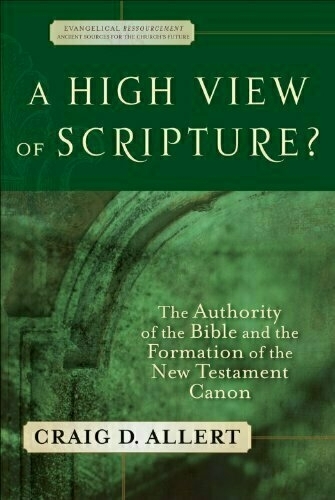
A High View of Scripture? The Authority of the Bible and the Formation of the New Testament Canon by Craig D. Allert
See my prior review here.
A Short History of Nearly Everything by Bill Bryson
A quick engaging read. But honestly, Bryson’s prose is so breezy and clever that I’m inclined to distrust it.
Directorate S: The C.I.A. and America’s Secret Wars in Afghanistan and Pakistan by Steve Coll
A knowledgeable, detailed overview of the CIA’s involvement in those regions over the past decade. Interesting stuff. Also annoying that the author and his editor apparently believed it to be necessary to include the periods in abbreviating Central Intelligence Agency as “C. I. A.” every single time it appeared in the book. Every. Single. Time.
Wanderers by Chuck Wendig
Equal parts Stephen King and Michael Crichton. Really entertaining dystopian sci-fi/horror.
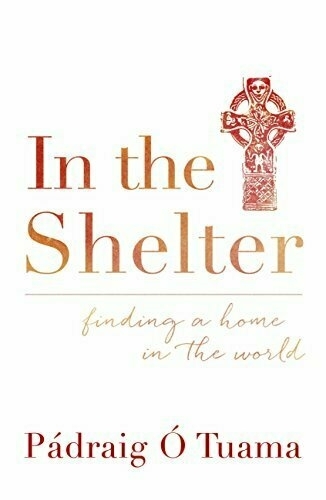
In the Shelter: Finding a Home in the World by Pádraig Ó Tuama
Oh man, this one was good. Ó Tuama is an Irish poet and student of the New Testament with remarkable compassion and insight.
The Tech-Wise Family: Everyday Steps for Putting Technology in Its Proper Place by Andy Crouch
Not bad, but not as groundbreaking as all my Twitter folks made it out to be. Practical advice, though.
Man’s Search for Meaning by Viktor E. Frankl
A classic memoir and philosophical text by a Holocaust survivor.
Flunking Sainthood: A Year of Breaking the Sabbath, Forgetting to Pray, and Still Loving My Neighbor by Jana Riess
Rachel Held Evans (RIP *sniff*) did it better.
Noughts & Crosses by Malorie Blackman
Dystopian YA where the twist is that blacks are the race in power and whites are just gaining their freedom. Not as much done with that twist as there should’ve been if that’s the key conceit of the novel, but it wasn’t bad.
The Kremlin Strike by Dale Brown
Sometimes you just gotta go for mindless entertainment.
The Overstory by Richard Powers
Mindless entertainment this one was not. A curiously-crafted novel with short stories that provide background for the main characters who drive the second half of the novel. All about trees. Yes, trees. Oh, and it won the Pulitzer Prize for fiction and was shortlisted for the Man Booker.
American Spy by Lauren Wilkinson
A spy story written from the perspective of a female spy in the 1980s. Strong start, wanders and gets boring in the back half.
Pachinko by Min Jin Lee
An epic generational tale starting in 1920s Japan and Korea. Very enjoyable storytelling.
Scythe by Neal Shusterman
This was a really fun YA novel. In the near future, human suffering and death has been eliminated. To avoid population overgrowth, a special group of people are chosen as “scythes”, tasked with killing a certain number of people every year. Moral dilemmas ensue. I want to read the next book in the series!
The Fifth Column by Andrew Gross
Fairly basic adventure novel set in 1940’s New York focused on German spies living in the USA. Quick, light read.
Letters to a Young Catholic by George Weigel
I’m not Catholic, and I’m not that young. But Wiegel’s collection of “letters” on various topics of interest to the Catholic church were an interesting perspective for a Protestant like me.
In The Shelter: Naming the Gadarene Demoniac
I’m currently reading Pádraig Ó Tuama’s wonderful In the Shelter: Finding a Home In the World. His reading of this bit of the story about the Gadarene Demoniac from Mark 5 took my breath away:
Jesus asks him what his name is. The man answers:
’ My name is Legion, for we are many.’
This can be read in so many ways. The word ’legion’ is a militaristic word, and the Roman legion who had decamped to this particular geographic area bore the boar as their standard on their banners. This answer of the anonymous man can also be understood simply, and powerfully, as an indication of the dignity of language.
‘What is your name?’ he was asked. And he answered, ‘I am what has afflicted me.’ How many of us know the truth of this? When we are towards the end of ourselves, we begin to believe that we are only what we struggle with. The man here tells us a truth that is awful - we baptise ourselves with names that are far from the only truth about ourselves.
What a beautiful lesson here - that what is true about each of us is far more than the struggles that we so often identify with. I am far more than my sin or my worry or my illness. I am a beloved child of God, and Jesus sees, and calls me to see, that truth transcending my afflictions.
A High View of Scripture?
About a year ago I started getting interested in historical criticism as it relates to the Bible. As I explored and read several books, I kept wondering: where was this discussion, or even the acknowledgement of this topic, in the evangelical tradition in which I grew up?
Most all I’ve ever encountered in evangelicalism in this area is that the Bible is made of up 66 books, that they’re “inspired” and “inerrant”, with varying levels of nuance about what those terms mean. I can’t remember ever hearing a discussion about how, when, or by whom the books of the OT and NT were assembled; only that that the collection of 66 is canonical and that’s basically that.
Where, I lamented on Twitter, were any evangelical takes on anything approaching historical criticism? This question did lead to a dear Episcopal priest in Wisconsin sending me three of his seminary textbooks on the topic (thanks again, Rev. Mike!), but from the evangelical perspective, I didn’t encounter anything much more nuanced than what I found on the “God said it, I believe it, that settles it” bumper sticker.
Enter Dr. Craig Allert’s A High View of Scripture?: The Authority of the Bible and the Formation of the New Testament Canon. Allert is a professing evangelical and professor at Trinity Western University in British Columbia. A High View of Scripture? is published by Baker Academic as a part of their “Evangelical Ressourcement” series. The book’s purpose, says Allert in the introduction, is to “investigat[e] the implications of the formation of the New Testament canon on evangelical doctrines of Scripture.”
This study has been lacking in evangelicalism, he says, and we are poorer for it.
[The] neglect of the canon process has left evangelicals with an inadequate understanding of the very Bible we view and appropriate as authoritative. For the most part, evangelicals seem unconcerned with how we actually got our Bible, and when we do show interest, we rarely relate the implications of this concern to how this might affect a doctrine of Scripture. This is ironic since evangelicals hav been quite loud in proclaiming the ultimate authority of the Bible; surely that proclamation should be informed about how the Bible came to be.
Dr. Craig Allert, A High View of Scripture?, p. 12
In A High View of Scripture?, Allert draws heavily on the church fathers and early church writings to distinguish between Scripture and canon, to explore how the word “inspiration” was used early on to describe various writings and practices, both canonical and not, and how the church wrestled with the question of what writings were considered canonical well into the 4th century.
After taking a few chapters to overview the history, Allert asks some hard questions about how we should have that history inform our doctrine of Scripture. How should it affect our understanding of Scripture when we acknowledge that these “inspired” texts were not delivered on a platter as an autographed, bound volume, but were assembled and agreed upon by the church over a period of more than three hundred years?
Allert affirms the authority and inspiration of Scripture, but balks at “inerrancy”, since the Scripture doesn’t use that word of itself, and since the definitions of “inerrancy” are challenging, frequently seeming to be constructed post hoc in support of the theologian’s predetermined interpretations. While evangelicals prefer to be known as focused on “the Book” and dismissive of “tradition”, Allert insists that we can’t have a healthy doctrine and understanding of Scripture without acknowledging and embracing the fact that the early church played a key role in the formation of the canon of Scripture and what it means.
I very much appreciated A High View of Scripture? and would highly recommend it to my evangelical friends. We need more of this sort of thing. Not to use historical “criticism” to diminish the Scripture, but to reject the impulse to skittishly rush past canon formation on our way to Scriptural authority, and to recognize that our reliance on the Scripture need not be weakened by acknowledgement of the human participation in its writing and assembly.
2019 Reading, Compendium #4
Goodness, I’ve let this go a while without providing a list. Here we go…
Anointed with Oil: How Christianity and Crude Made Modern America by Darren Dochuk
A fascinating look at how the oil industry worked hand in hand with evangelical Christianity to shape America in the 20th century. Read Heath W. Carter’s 5-star review over at Christianity Today.
The Rule of Law by John Lescroart
Meh. This series has gone on far too long at this point.
My Antonia by Willa Cather
Easily my favorite of Cather’s Prairie Trilogy.
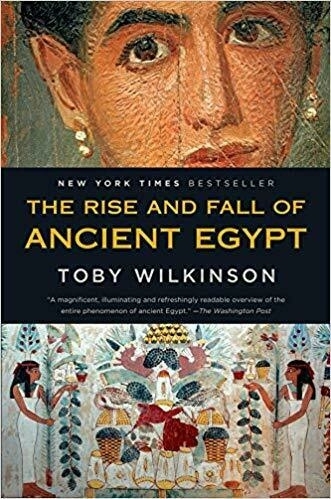
The Rise and Fall of Ancient Egypt: The History of a Civilization from 3000 BC to Cleopatra by Toby Wilkinson
The book wasn’t quite as long as the empire. Still trying to get my head around a legitimate empire that spanned millennia. Astounding.
Palace Walk by Naguib Mahfouz
I remember almost nothing about this book.
On The Neurobiology of Sin by Lazar Puhalo
A short treatise by an Orthodox bishop addressing, among other things, homosexuality and transgenderism. Reads like an undergraduate-level paper on genetics combined with a couple weak blog posts on theology. I was disappointed.
The Inner Kingdom by Kallistos Ware
A collection of essays from an Eastern Orthodox bishop.
God Land: A Story of Faith, Loss, and Renewal in Middle America by Lyz Lenz
I have a complicated relationship with this book, but I think it has some good insights about the church in the Midwest.
Last Day by Domenica Ruta
An interesting concept for a novel that never really came together.
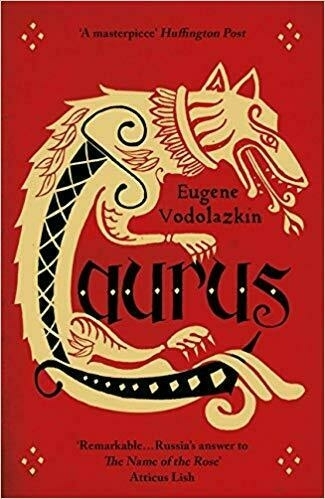
Laurus by Eugene Vodolazkin
Now this one was well worth reading. A beautiful novel about a medieval Russian “holy fool”. Rod Dreher has a nice piece about it if you want to read more.
Normal People by Sally Rooney
Maybe normal people are boring. Or at least this book was.
Reading Romans Backwards: A Gospel of Peace in the Midst of Empire by Scot McKnight
Start at the end of Romans, Dr. McKnight says, understand the context and audience, and then work your way back to get a better perspective on what the doctrinal passages mean. Interesting.
The Bird King by G. Willow Wilson
Picked up at random off the library shelf. A fantasy novel from a Middle Eastern Muslim perspective. Enjoyed it, though didn’t feel like the last third held up to the promise of the first two-thirds.
The Christian Imagination: Theology and the Origins of Race by Willie James Jennings
Oh man, this one was thick. A hard read but some good insight.
Alif the Unseen by G. Willow Wilson
The other book I read by Wilson the past couple months. Sort of a cyberpunk fantasy novel set in the Arab Spring in Egypt. Dug it.
The Orthodox Church: An Introduction to Eastern Christianity by Kallistos Ware
A historical and doctrinal primer by one of the esteemed bishops of the Orthodox Church.
Stokely: A Life by Peniel E. Joseph
A biography of Stokely Carmichael, the founder of the Black Panther Party. Knew nothing about him before reading the book. Quite a charismatic guy.
What Is a Girl Worth?: My Story of Breaking the Silence and Exposing the Truth about Larry Nassar and USA Gymnastics by Rachael Denhollander
I knew this woman was a hero for publicly coming forward with allegations of sexual abuse against Nasser. What I didn’t realize before reading the memoir was how integral she was in every part of building and executing the case against him. So much to love about this book and its heroes, Rachael and her faithful husband Jacob.
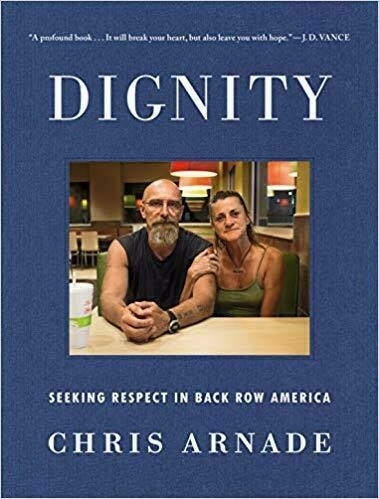
Dignity: Seeking Respect in Back Row America by Chris Arnade
This one really merits its own post. Arnade traveled the country exploring “back row America” and its people. Gripping personal narratives and photography.
A justice not to be feared but to be longed for
Here is my servant, whom I uphold
my chosen, in whom my soul delights
I have put my spirit upon him;
he will bring forth justice to the nations.
He will not cry or lift up his voice,
or make it heard in the street;
a bruised reed he will not break,
and a dimly burning wick he will not quench;
He will not grow faint or be crushed until he has established justice in the earth;
and the coastlands wait for his teaching.
Isaiah 42:1-4, NRSV
Often when I have read this passage or ones like it my first inclination is to think of this “justice” being established as a punishing sort of justice. God sends his servant, the Messiah, to justly deal with sin by punishing the bad guys. That’s largely how we’ve been taught, at least within my faith tradition, to think about God’s justice - as something punitive and to be feared.
But then we get to Matthew 12.
The Pharisees confront Jesus about his disciples picking grain on the sabbath. Jesus rebukes the Pharisees. “If you had known what this means, ‘I desire mercy and not sacrifice,’ you would not have condemned the guiltless.” Jesus then goes into the synagogue and provokes them further by healing a man on the sabbath. Which drives the Pharisees to start conspiring how to destroy Jesus.
When Jesus became aware of this [that the Pharisees were conspiring to destroy him], he departed. Many crowds followed him, and he cured all of them, and he ordered them not to make him known. This was to fulfill what had been spoken through the prophet Isaiah:
“Here is my servant, whom I have chosen,
my beloved, with whom my soul is well pleased.
I will put my Spirit upon him,
and he will proclaim justice to the Gentiles.
He will not wrangle or cry aloud,
nor will anyone hear his voice in the streets.
He will not break a bruised reed
or quench a smoldering wick
until he brings justice to victory.
And in his name the Gentiles will hope.”
Matthew 12:15-21, NRSV
This brought me up short when I read it this morning. This is what it looked like for Jesus to bring forth and establish justice. He rebuked the abusive religious traditions and hypocritical religious teachers. He healed. He didn’t just heal a few of them - read the words! “He cured all of them”!
What if, when we think about God’s justice, this is what comes to mind? Not a fearsome, punishing justice against sinners, but a loving restoration? A rebuke of abusive tradition? Jesus taking broken lives and bodies and making them whole? A justice that says ’this is not how things were intended to be, and so I am making things right again’?
This is a justice not to be feared but to be longed for.
Family Movie Night: Chain Reaction (1996)
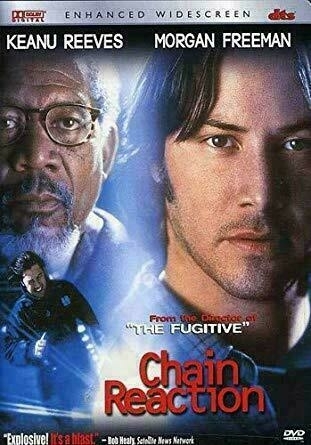
With a kid under the weather after some dental work, it was a good night for a family movie. The library provided the convenient loan of a nostalgia pick for Becky and me: Chain Reaction, the 1996 film starring Keanu Reeves, Morgan Freeman, and Rachel Weisz.
If you’d asked me before I looked it up, I would’ve guessed this came out when I was still in high school, since I remember watching it a handful of times back in what feels like that timeframe. But, since it came out in ‘96, I probably watched it for the first time at the dollar theater in Longview, TX while I was in college, probably with Becky along on a cheap date.
My first thought when starting the movie was “wow, this reminds me in a lot of ways of The Fugitive”. All the Chicago scenery, a bunch of the same guys playing Chicago cops, familiar shots of midwestern woods and small waterways… then I looked it up on IMDB and quite belatedly realized that Andrew Davis directed both movies. No surprise then, that they look the same.
The plot is about as spare as I remember it - Reeves’ team makes some scientific breakthrough to generate cheap electricity from hydrogen, and his lab is blown up before they can publicize. Morgan Freeman is the shifty leader of the foundation providing Reeves’ funding, who may or may not be bankrolled by the CIA. That’s about as much plot as you need, as the middle of the movie ends up being a series of chases across a drawbridge in downtown Chicago, a frozen lake (with a fan-powered airboat!) in Wisconsin, and through the Natural History museum in Washington DC.
Chain Reaction is innocuous enough, drawing just enough charisma from Morgan Freeman and enough action through the Chicago landscape to keep the family at least mildly interested for 100 minutes. I was surprised at how much of it I remembered, having not watched it for more than a decade.
Mostly, though, now it just makes me want to watch The Fugitive. Same Chicago chase scenes, but Tommy Lee Jones and Harrison Ford as the cat and mouse… if only they’d had a role for Morgan Freeman in it, they might’ve really had something.
Bullet Points for a Monday Morning #6
Because it’s been a while…
- Lots of topics have rattled around in my head… none have congealed enough for a real post. Oh well.
- We did an Alaska vacation in July. It was amazing. It’s really kind of sad that I haven’t posted anything about it so far.
- It’s September, which means my summer cheering for the first-place Chicago Cubs has faded into a fall where the Cubs fade and likely just miss the playoffs. Fortunately football season has started. Now if only the Huskers could win a little more consistently…
- I listened to some old school Caedmon’s Call last week and was reminded why I loved that group. So tight.
- In the spirit of supporting local journalism, last week I subscribed to our local newspaper. My kids think it just means I’m old.
- My goal for book buying and reading was to keep the book pile shorter than my bedside table. Then I split the pile into two piles and now the goal is to keep each of them shorter than the bedside table. I really just need to find room for another bookshelf somewhere.
- Oh, and my kids are probably right - I am just getting old.
- Without mentioning titles, I can tell you off the top of my head that I have books in my to-read stack by Chris Arnade, David Bentley Hart, Fleming Rutledge, Bradley Jersak, Craig Allert, Justin Earley, and tomorrow will add one by Rachael Denhollander. And that doesn’t even acknowledge the pile-up of ebooks in my Kindle app.
Probability of my next post being anything than another Finished Reading Compendium? Pretty slim.
2019 Reading, Compendium #3
A few added to my list…
Good Omens: The Nice and Accurate Prophecies of Agnes Nutter, Witch by Terry Pratchett and Neil Gaiman
Somehow I’d not read this before, and with all the buzz on the Amazon TV series, figured it was worth giving it a try. I find Pratchett an acquired taste… one which I’m not totally on board with yet. Still, a fun read.
Paul and Gender: Reclaiming the Apostle’s Vision for Men and Women in Christ by Cynthia Long Westfall
Dr. Westfall brings her incredible expertise in Greek to bear on the Pauline texts about gender and gender roles within the church. Thorough and scholarly yet readable, she makes a strong case for an egalitarian position. Worth a read if you’re interested in this area of debate.
The Song of the Lark by Willa Cather
Continuing my read of Cather’s Great Plains Trilogy… a nice change of pace.
God in the Rainforest: A Tale of Martyrdom and Redemption in Amazonian Ecuador by Kathryn T. Long

Say the names Jim and Elisabeth Elliot to anybody who grew up in the evangelical church and you’ll almost certainly get quick recognition of the story of missionaries trying to reach a remote Ecuadorian tribe, and of the five men who were killed by that tribe after initiating contact. Elisabeth Elliot’s account of their efforts in Through Gates of Splendor became a bestseller the year after their deaths.
In God in the Rainforest, Dr. Long (Professor Emerita of History at Wheaton College) gives a historian’s critical eye to the long story of missionary contact and involvement with the Huaorani people in Ecuador. She manages to be incredibly evenhanded, avoiding the hagiography of Through Gates of Splendor and its follow-ups and examining the effects (both positive and negative) of the introduction of Western culture and Christianity to a previously unreached people group.
This one got particularly interesting for me because my wife’s parents served for decades with one of the missions organizations involved there and know those people, to the point that at least one of the people named in the book attended our wedding.
Separating missions work from our Western impulse to colonialize is an ongoing struggle. God in the Rainforest gives a fair view of how that struggle played out in the jungles of Ecuador in the second half of the 20th century.
How to Forget: A Daughter’s Memoir by Kate Mulgrew
I don’t remember who recommended this one. Turns out it was a short but not easy read. Mulgrew (probably best known as an actress for playing Captain Janeway on Star Trek: Voyager) didn’t have a very happy childhood or very good relationship with her parents. Mulgrew uses uses the story of her parents’ final years to frame her reflections on her childhood and younger life, and grapples with how to deal with the realities of her youth as she looks back.