
Category: books
You are viewing all posts from this category, beginning with the most recent.
Book Review: <em>The Echo Within</em> by Robert Benson
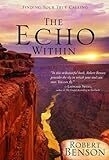 There is a particular class of inspirational book these days that you can identify on the shelf without even looking at the content. First is the book’s size - usually no larger than 5 by 8 inches. Second is the cover art - typically a scenic vista or natural landscape, meant to soothe and inspire. I didn’t get a look at the cover art before I agreed to accept a free copy of The Echo Within from Waterbrook Press and review it on my blog, but as soon as I pulled it out of the envelope, I started to wonder. Is this gonna be another one of those fluffy inspirational books?
Robert Benson is the author of over a dozen books, all of which he describes on his website as being about one thing: “paying attention”. Says Benson:
I write about paying attention for the things that can point us to the Sacred in our lives. About the longings that we have for home and community and a sense of belonging. About practice and ritual and work and contemplation and the way that such things can be constant reminders of who we are and who we are to become.
And in this little volume, as you might guess from its title, Benson urges us to listen to “the echo within” - the little voice within ourselves that gives us some inclination of choices we should make, directions we should take, things we should believe. In the first chapter he describes it this way:
I am coming to believe that the small voice within me is an echo of the Voice that is still speaking the incarnate word that I am here to become, an echo of the Voice that spoke us all into being, an echo of the Voice that spoke all that is alive.
Sometimes we are hesitant to trust that small voice within us because we think it is just ourselves doing the talking… because we have heard a similar voice inside us say things that are hurtful and angry and hateful, to ourselves and about others.
We must learn to listen deeper and deeper, seeking out the true voice within us that echoes the Voice of the One Who made us…
The fact that the Voice that calls to us often sounds like our own is not something to be mistrusted or feared. It is a sign of how close God is to us.
Benson has some good insights in The Echo Within about recognizing the talents, inclinations, and desires that God has built into us - sometimes we do tend to make this whole “God’s leading” thing more difficult than it needs to be - but on the whole Benson strays just a little too far in the “listen to your inner voice” direction, with no balance of recognizing the Truth that is revealed to us in Scripture.
For the person running weary and needing some quiet encouragement, The Echo Within might be a nice little volume to pick up. Read and consider it with discernment, though. That inner voice might be God, but then again, it might not be.
Book I Read: <em>The Weapon</em> by David Poyer
 Normally I’d write up a whole 250-word review for a book I finished, but The Weapon by David Poyer just doesn’t inspire that sort of review. I’ve enjoyed Poyer’s other Dan Lenson novels but this one was really just okay. A middling, disjointed story at best. As big a fan as I was of Tom Clancy back in the 90’s, I should be the last to criticize authors for hanging on and writing a long series around a single character, but Poyer appears to be the next in a long line of authors that have burned out their series that way (see also: Tom Clancy, Dale Brown).
So, yeah, I read it, and was mildly entertained… but only mildly. It’s time for these authors to start writing some creative plots instead of just stringing us along for yet another novel featuring the same guy in similar situations. Bleh.
Book Review: <em>The Jazz Ear: Conversations Over Music</em> by Ben Ratliff
Normally when we think about musicians and “their music”, we think about the music that they write, perform, and record. But author Ben Ratliff (jazz critic for the New York Times) decided to ask a different question. What do these musicians listen to and find influential? What are they thinking and hearing as they listen to the music? So Ratliff met with a dozen or so noted jazz musicians, asked them what tracks they’d like to listen to, and then relates to us the experience and conversations of listening to the music with the musicians. The result is The Jazz Ear: Conversations Over Music. It turns out to be fascinating stuff.
 Though I am a musician and fancy myself a fan (though not a hardcore aficionado) of jazz, it quickly became clear to me that the plane these guys think on is just incredibly high. It is fascinating in its own way, though, listening to serious jazz players talk about how they think about jazz. My favorite part of the book, though, was the reference list at the back, where Ratliff lists each recording that he listened to with each of the musicians. It has been a great input for my personal playlist… so much to explore.
If you’re a musician, like jazz, or just want to explore the minds of some great musicians, I’d recommend picking up The Jazz Ear. It’s a short read, but quite worth it.
[You can buy The Jazz Ear from Amazon.com.]
Book Review: <em>Ender In Exile</em> by Orson Scott Card
I’ve been a big fan of Orson Scott Card’s Ender series since I read it a few years ago. Ender’s Game is just brilliant storytelling, and Speaker for the Dead is equally good, perhaps even better themes and story woven through it. So when I saw Ender In Exile on the library shelf, it was a no-brainer to pick it up.
 Ender In Exile is not a book you would want to pick up and read as a stand-alone story without having at least read Ender’s Game first. EIE takes place somewhere in between two of the final chapters of Ender’s Game, telling the story of the teenaged Ender Wiggin. Once he had defeated humanity’s mortal enemies and then had his reputation dragged through the mud in court martial, he then travels off to become the governor of a colony on another planet. A good bit of the story is told in the form of emails exchanged between Ender, his parents, his siblings Valentine and Peter, and Ender’s former military commander. Ender manipulates situations with seeming effortlessness, always nobly wanting the good and right thing.
EIE will be interesting to you if you’ve read and enjoyed the other books in the Ender series. If not, I’d probably stay away from it, and would recommend Ender’s Game instead as a good introduction to Card’s work. I think it’s time that OSC come up with a new story and series.
[You can purchase Ender’s Game and Ender In Exile from Amazon.com.]
Book Review: <em>The Anglo Files: A Field Guide to the British</em> by Sarah Lyall
Every culture has its quirks, but to really notice them and appreciate them you need to be able to look from the perspective of an outsider. When you can then write about those quirks with wit, humor, and insight, then you’re approaching what author Sarah Lyall has achieved with The Anglo Files. Lyall, a correspondent for the New York Times, was posted to Britain some ten years ago, married a Britisher, and now raises two children there in London whilst still writing for the Times.
 In The Anglo Files we get Lyall’s thoughts on the oddities of British culture - there are chapters on drinking, hedgehogs, social classes and the nobility, cricket, and the propensity to apologize for everything. She’s not afraid to tell stories on herself, either. And those stories prove insightful; they’re not the clueless-American-rube-bumbles-around-Europe stories, they’re the urbane-American-married-to-a-Britisher-still-baffled-by-Europe stories, which are really more fun. I myself have never been to Britain, but have long been intrigued with our brethren across the pond, so I very much enjoyed Lyall’s insights into them.
Oh, and did I mention the humor? I was good-naturedly amused throughout the book, but one line in particular had me laughing out loud: she describes an inferior washing machine as having a spin cycle that took so long it should’ve been called a Ring Cycle. That’s worth at least a couple of chuckles, folks.
All in all, a fun book. Definitely worth the read.
[The Anglo Files is available at Amazon.com.]
Book Review: <em>Jesus and the Victory of God</em> by N. T. Wright
I should say this up front: the idea that I’m going to be able to intelligently “review” Wright’s massive Jesus and the Victory of God in a 250-word blog post is ridiculous at best, and insane at worst. But I’m posting individual reviews for each book I finish this year, so here goes.
 I first became familiar with N. T. Wright through some of his shorter books: What Saint Paul Really Said, Simply Christian, and, of course, Surprised by Hope. Somewhere along the way I found out that he has written a three-volume set specifically about Jesus, and so I requested one of the volumes for Christmas back a year ago. (Why I requested Volume Two of a three volume set is beyond me… but I did.)
Sure, there have been a million books written about Jesus. So why does Wright’s stand out? Wright takes the angle of exploring what I’ll call the “historical” Jesus. What was Jesus, the man, thinking? What were his goals? How did the things he said fit into the theological and political scene of first-century Palestine? Wright answers these questions brilliantly, with clarity and insight.
As just a small example, Wright at one point asks this question: Did Jesus know that he was the Son of God? Certainly we affirm that Jesus was fully man and fully God, but how did Jesus the man know that he was God? Wright gives by way of answer this analogy: Jesus knew he was the Son of God in the same way a musician knows they are a musician. They have the skills and abilities of a musician, and something deep within them says ‘I simply must make this music’. As such, a person knows they are a musician. Similarly, Jesus knew he had the skills and abilities of the Messiah, and had the internal calling. It may not be a perfect analogy, but it certainly provides opportunity to stop and think.
Jesus and the Victory of God deals with Jesus’ life and teaching, leading right up to his death. Wright then devotes the entire third volume in his series to the Resurrection. (I got that book for Christmas this year.) Jesus and the Victory of God isn’t a simple read - it’s more like a college-level scholarly text. But if you’re willing to make the effort to dig through it, it will reward you with insight into the life and purposes of Jesus.
Definitely recommended. [You can buy Jesus and the Victory of God from amazon.com.]
Book Review: <em>The Philosopher's Apprentice</em> by James Morrow
I picked up The Philosopher’s Apprentice on a whim from the library. And what a whim. The flyleaf gave a thumbnail description of a philosophy doctoral student who takes a job becoming the tutor for a teenage girl who was in an accident and lost her sense of morality. OK, sounds interesting as far as that goes. But that’s just the beginning of the story.
 The Philosopher’s Apprentice is really a story in three acts. Act One: doctoral student tutors teenager on remote Caribbean island. Finds out there is more to the island than he was led to believe, including two sisters of his student, a bunch of genetic engineering, and talking iguana. I know it sounds like a tripped-out dream, but it’s just hard to give a lot more detail without spoiling major points of the plot.
Act Two: philosophy tutor watches from a distance as his former student, suddenly fabulously wealthy, takes his teachings on morality to unbelievable ends.
Act Three: tutor and student end up together again and have to deal with the fallout from the rest of the world as it reacts to the student’s programs.
The Philosopher’s Apprentice is at times quite humorous, at times quite serious, and dances along the line between fiction and fantasy without quite ever deciding where to land. It was a fun read, provoking some interesting thoughts along the way. Worth picking up if you get the chance.
[You can buy The Philosopher’s Apprentice at Amazon.com - on sale cheap right now!]
Book Review: <em>The King of Sting</em> by Craig Glazer and Sal Manna
Sometimes, real life is even better than the stories. The King of Sting details the adventures of its author, Craig Glazer, as a twenty-something college student in the early 1970’s. Glazer was inspired by a movie “sting” - a scene where a team of shady characters pretend to be police in order to steal from criminals - and, with the help of a few friends, became a master sting artist himself.
 What started out as acts motivated by revenge and noble causes, though, soon degraded into stings either to make money or just fuel his adrenaline rush. Glazer worked as a sworn law enforcement officer and later was prosecuted and served jail time for his deeds on the other side of the law.
Glazer’s story is entertaining but serves as a good reminder that sin will, in its own time, find you out.
[You can buy The King of Sting at Amazon.com.]
Book Review: <em>Ring</em> by Stephen Baxter
I was browsing the sci-fi section in the local library and came across an old paperback with a familiar name on the spine: Stephen Baxter. I’m most familiar with Baxter’s collaboration with the late Arthur C. Clarke on the Manifold trilogy, but have enjoyed a few of his solo works as well. This one looked to be a bit older (there was a quote on the cover from Clarke hailing Baxter as “a major new talent”), but I figured it was worth a try.
 Ring finds humanity in the Third Millennium traveling through space, having learned some fantastic tricks of physics (including controlling wormholes that access the future) from alien races. Having also achieved “anti-senesence” technology (i.e. they can stop aging), a group of explorers decide to undertake a million-year trip at relativistic speeds, keeping a wormhole open the whole way so that they can communicate from the future back to the past.
What unfolds is a fascinating story of space and time, on a scale of megayears. Baxter is at his best when he’s dealing with the hard science, describing the aging process of stars, but he holds his own, too, with the softer side - imagining what a hyperspace trip across the universe might feel like from the perspective of the solitary human piloting the ship, recognizing that even millions of years of “progress” won’t change human nature.
If you’re into hard sci-fi, Ring is worth picking up, a very enjoyable read.
[You can buy Ring at Amazon.com.]
2008: A Year of Reading in Review
This the only year-end post I’ll write; just a summary of my book reading list from 2008.
Some quick details:
Total Books Read: 78. This is down a bit from 86 last year.
Fiction: 57. Non-fiction: 21.
That ratio is still weighted a little heavily toward fiction, I think, but when I know how shallow and quick some of those novels were and how long and think some of the non-fiction was… well, it evens out.
Favorite novel of the year: A Prisoner of Birth by Jeffery Archer. This was far and away the best, most enjoyable story I read all year. It’s essentially a modern-day retelling of Alexandre Dumas’ The Count of Monte Cristo. What sold me on it, though, was that there were characters you could really root for. Good guys that were really good. Honorable supporting characters who remained honorable. Such a good story. I should put it on reserve at the library again.
Runner up: The Time Traveler’s Wife by Audrey Niffenegger.
Favorite non-fiction of the year: This is tough because non-fiction spans such a range of subjects. Some high points, though:
- James Van Allen: The First Eight Billion Miles by Abigail Foerstner. A biography of the Iowan who played a huge role in space exploration.
- Newjack: Guarding Sing Sing by Ted Conover. An inside look at the correctional officers who run Sing Sing prison.
- A Case for Amillennialism by Kim Riddlebarger. Quite helpful.
Worst book of the year: How Would Jesus Vote? by the late D. James Kennedy and Jerry Newcombe. I thought my blog review of it was bad until I read Ron’s review. He said, in short:
The book is awful. Simply awful. I can’t stress to you how amazingly awful this book is. Do not buy, read, or borrow this book. I will likely use my copy for kindling in the fireplace this winter.
I love Ron.
OK, that’s enough book wrap-up for this year. I’m contemplating a change in format for book reviews next year, doing a full post on each book and cross-posting them to Amazon to build a little bit of reviewing credibility there. Dunno, it’s just a thought. [No, Geof, I’m not doing it entirely because you changed the format of GNM.]
Next year’s list will still exist in some format. First book on it will be an old one by Stephen Baxter. Almost finished it for 2008, but not quite.